
Where does website traffic come from?
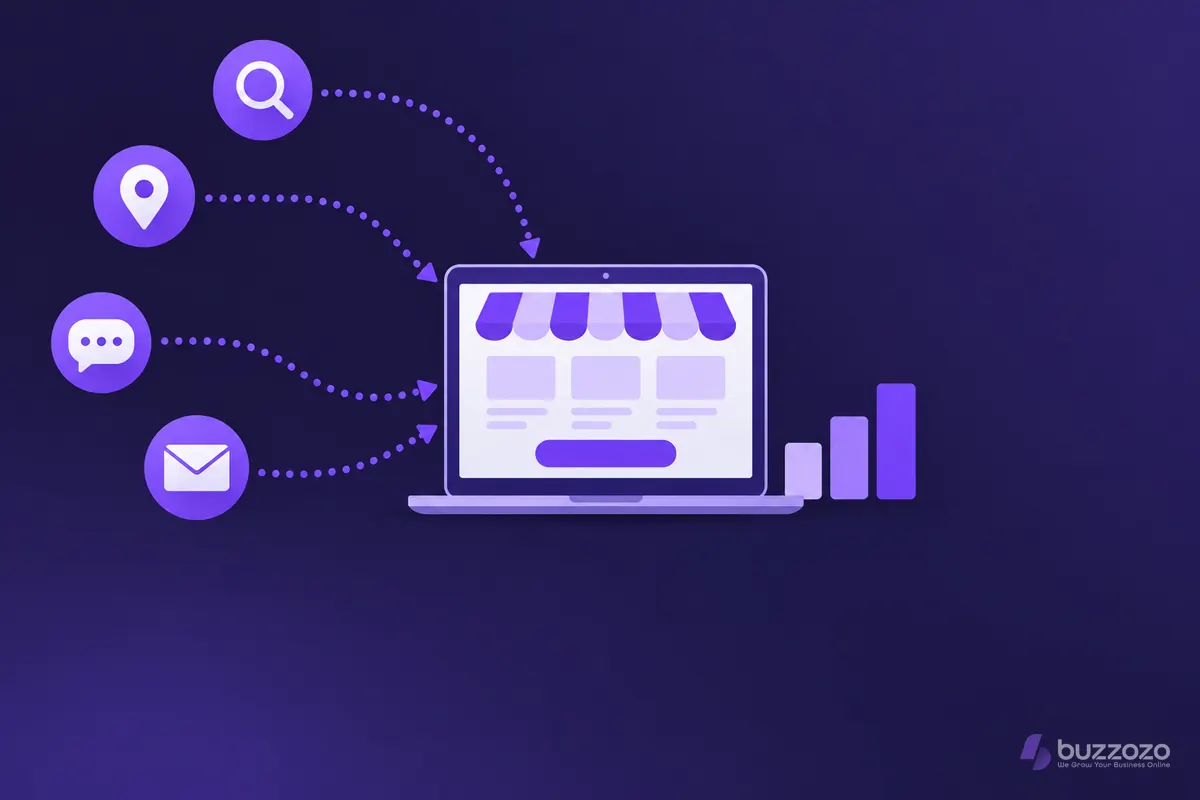
Website visitors arrive in a handful of ways. Some find you in search results or on a map. Others click a link in a post, an email, an advert or another website. A few type your address because someone told them about you.
- Search: people type a question or a service into a search engine and click your page.
- Maps and local results: people search for a service near them and tap your business listing.
- AI assistants: people ask an assistant for a recommendation and follow a link to you.
- Social media: followers click through from your posts, profile or paid social adverts.
- Email: past customers and subscribers click a link in your newsletter.
- Paid search ads: your advert appears above the results for the searches you choose.
- Referrals and word of mouth: other websites link to you, and customers pass your name on.
Google's own search engine optimisation (SEO) starter guide lists the same ways to promote a site. They are social media, community engagement, advertising both offline and online, and word of mouth. It calls word of mouth one of the most effective and lasting ways, and warns that it takes time.
Which way of getting more visitors is right for your business?
The right mix depends on how your customers look for you. A plumber is found when someone searches in a hurry. A gift shop is often found by scrolling. Start with the channel your best customers already use, then add the next one.
Here is how the main channels compare for a small business:
- Search: slow to build, lasts the longest, and needs pages for every service you sell.
- Maps and local results: the most direct route to local calls, and needs a complete, active Business Profile and reviews.
- Paid search ads: visitors within days, but they stop the moment you stop paying.
- Social media: good for products people browse, and needs regular posts to keep working.
- Email: little cost per message, and best for bringing past customers back.
Paid ads are the quickest way to test which pages turn visitors into enquiries. Our Google Ads management sends paid traffic to pages built to convert it, so you can see what each enquiry costs.
How do you get more traffic from Google search?
Write a clear page for each service and place you cover, in the words customers use to search. Give every page a plain title and description, and answer the questions people ask before they buy. Then keep adding helpful pages and improving the ones that already get visits.
Google says its ranking systems favour helpful, reliable information made to benefit people, not content made to manipulate rankings. Its guide to people-first content warns against pages made mainly to attract visits from search engines. In practice that means one strong page per service, not a dozen thin ones.
- Use the words your customers use, such as "boiler repair" rather than "heating solutions".
- Give each page one clear topic, title and heading.
- Answer the common questions in the first lines of the page.
- Link related pages together so visitors and search engines can follow them.
- Make every page fast and easy to read on a phone.
Our guide to what on-page SEO is walks through each of these page by page.
How long does it take for SEO to bring more visitors?
Expect weeks for small changes and months for real growth. Google says some changes take effect in a few hours and others take several months. It suggests waiting a few weeks before judging whether a change helped.
That advice comes from the same Google SEO starter guide linked above, which also says not every change will make a noticeable difference. That is why search work is a steady monthly job rather than a one-off fix. Each month you look at what moved, keep what worked and try the next improvement.
How do you get more local customers to find your website on Google Maps?
Claim and complete your Google Business Profile, keep its details matching your website, and ask every happy customer for a review. Local results are where many service businesses win their calls, and the profile links straight to your site.
Google's help page on improving your local ranking says local results are mainly based on relevance, distance and prominence. Prominence takes in how many websites link to your business and how many reviews you have. Google also says businesses with complete and accurate information are more likely to show up in local search results.
- Choose the category that best describes your business.
- Add your hours, services, photos and service area.
- Reply to every review, good or bad.
- Use the same business name, address and phone number on your site and profile.
Our guide to getting your business on Google covers the set-up. For ongoing work on your profile, reviews and area pages, see our local SEO service.
Rather have it done for you? We build your website free, it goes live in days, and you pay nothing for the first 14 days. No card needed. See how the free 14-day trial works.
How can AI assistants send people to your website?
AI assistants recommend businesses they can read and trust. Clear pages that answer questions directly, business facts that match everywhere, and good reviews make you easier to recommend. The same groundwork that helps search also helps AI answers.
When someone asks an assistant for "a good electrician near me", it pulls together what your website, your listings and your reviews say about you. If those sources disagree, or your site never says plainly what you do and where, you are harder to recommend. Our guide on how to get your business into AI answers explains what to fix first.
Can social media and email bring more visitors to your website?
Yes, and they bring people who already know you. Regular posts send followers to your new pages, offers and articles. A short email to past customers can bring a steady stream of return visits, as long as you have their consent.
Email has rules. The Information Commissioner's Office (ICO) is the UK regulator here. Its guidance on electronic mail marketing says you must not send marketing emails or texts to individuals without specific consent. There is a limited exception for your own previous customers, often called the soft opt-in. Every message must also give people a simple way to opt out. This is general information, not legal advice; check the ICO guidance for your own case.
Social media works best as a habit, not a burst. Our social media management plans, posts and replies for you each month, so the link to your website keeps working.
Why does getting more website traffic take skill and time?
Because traffic comes from dozens of small jobs done well, every month, for months. Each one is simple on its own. The skill is knowing which jobs matter for your business, doing them properly and spotting what to change next.
A typical month of traffic work for a small business includes:
- Checking which searches bring visitors and which pages are slipping.
- Writing or improving at least one page that answers a real customer question.
- Fixing slow pages, broken links and anything that stops a page being found.
- Updating the Business Profile with posts, photos and replies to reviews.
- Asking recent customers for reviews at the right moment.
- Posting on social media and sending a short email to past customers.
- Checking that new visitors turn into calls and enquiries, not just page views.
Miss a month and little changes. Miss six and competitors who kept going pull ahead. A mistake, such as blocking a page from search or changing addresses without a redirect, can quietly cost visitors for weeks before anyone notices.
How do you know if more traffic is bringing more customers?
Count enquiries, not just visits. More visitors only help if the right people arrive and get in touch. Track calls, form enquiries and bookings from each channel, and judge every change by those numbers.
A worked example shows why. Say a café's site doubles its visits from a viral post, but nobody books a table. Its neighbour gains fewer extra visits from local searches like "breakfast near me", and gets two new bookings a week. The second site gained less traffic and more customers. Our guide on how to get more leads from your website covers turning visitors into enquiries.
Should you grow your website traffic yourself or have it done for you?
You can do it yourself if you have a few hours every week and enjoy learning. If your time is better spent running the business, having it done for you is usually the faster route to steady visitors and enquiries.
Doing it yourself means learning how search and local results work, writing pages, managing your profile and reviews, posting, emailing and checking the numbers each month. None of it is hard. The hard part is doing all of it well, without a break, while running a business.
If that list looks like a second job, hand it over. Buzzozo's SEO and AI search service does this work for small businesses. Every website we build already comes with on-page SEO and an AI-search-ready build in the Website plan. When you want to climb further, SEO and local SEO work is priced per job, because it depends on your type of business and the competition. We quote after a quick chat, so you know the cost before any work starts.
Not sure your current site is up to it? Start with the website itself. Our Website plan is from £149 a month at the founding price for the first 100 businesses, with no contract, and you can cancel any time. See what it includes on our plans and prices page, or start your free 14-day trial. No card needed.
Common questions
What is the quickest way to get more traffic to my website?
Paid search ads are the quickest, because your advert can show the same day. The visitors stop when the ad spend stops. Search, local results and email take longer to build, but keep bringing visitors without paying for each click.
Is it possible to get more website traffic for free?
Yes. Search, your Google Business Profile, social media, email and word of mouth cost nothing per visit. They do cost time, and most of the work repeats every month. That time is the real price of free traffic.
Why is my website getting no traffic?
The usual reasons are pages that do not match what people search for, a site that search engines cannot read or reach, no Business Profile, or no links from anywhere else. A new site also takes time to be found. Start by checking each page answers a real customer search.
How much traffic does a small business website need?
There is no set number. A local trade can do well with a modest number of the right local visitors, if they call. Judge your site by calls and enquiries, and grow the traffic that brings them.