
Which marketing ideas cost nothing to start?
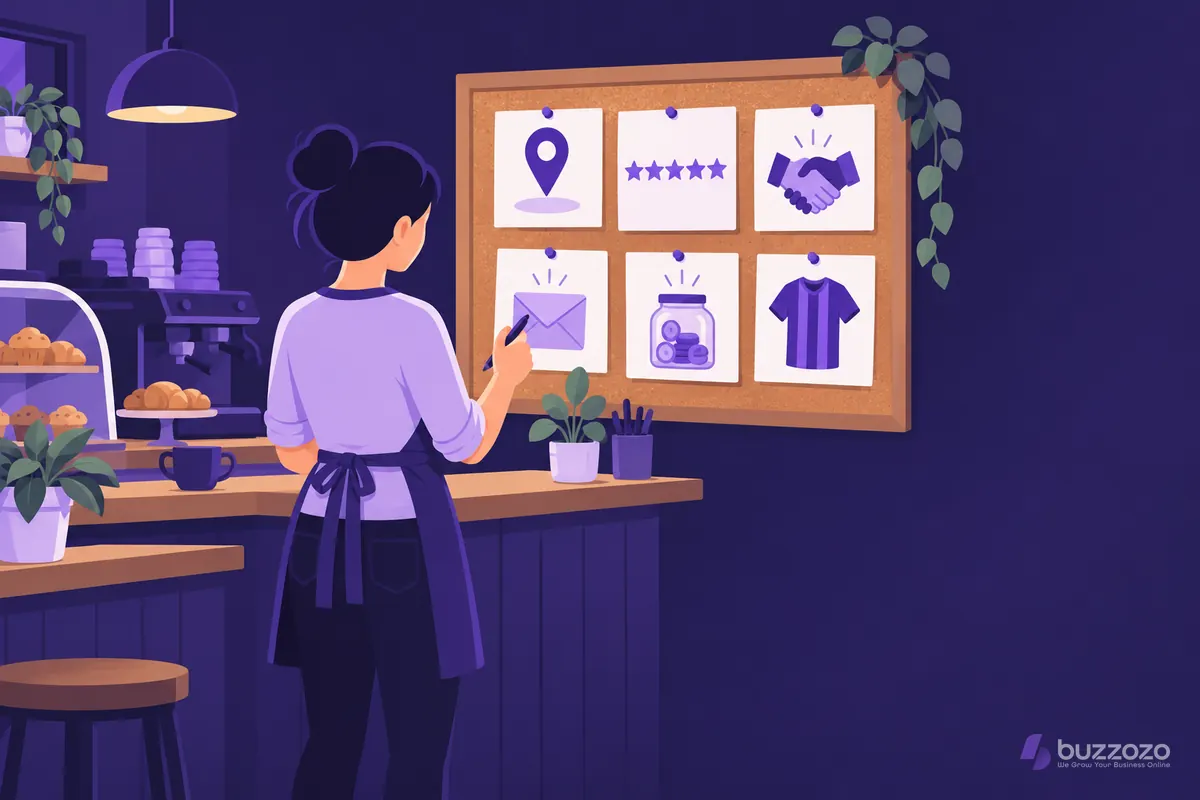
Four ideas cost nothing but your time: a complete Google Business Profile, customer reviews, referrals and email to people who agreed to hear from you. Start with these. They also make the paid ideas work better later, because an advert sends people to the same profile and reviews.
Here is how the ideas in this guide compare on cost and effort:
- Free, low effort: filling in your Google Business Profile.
- Free, steady effort: asking for reviews and referrals after each good job.
- Free, more effort: a short email to past customers every month or two.
- Paid, low effort once set up: Google Ads on a small daily budget.
- Paid, one decision a season: sponsoring a local team, fair or event.
For each idea below you will find what it needs and how to tell if it works. Try one or two at a time, so you can see which one brought the customers in.
How do you get more from your Google Business Profile?
Fill in every part of it. Google says creating a Business Profile and listing your business on Google is free. Add your hours, photos and services so that, in Google's words, you get discovered by customers near you. Then keep the details right whenever your hours or services change.
What it needs: an hour to set it up and verify it, then a few minutes whenever something changes. Google's Business Profile page also explains that you can share offers and updates and reply to reviews from the same place.
How to tell if it works: Google says the profile gives you insights on calls, reviews, bookings and more. Look at them once a month. If calls and bookings rise after you complete the profile, it is doing its job. Our local search optimisation service combines an accurate profile, useful local website content, consistent business details and genuine customer reviews.
How do reviews help a small business win customers?
Reviews show a stranger what past customers thought of you, in their own words. They cost nothing to ask for, and you can reply to them from your Business Profile. Replying to every review, good or bad, shows the next person reading that you care about the work.
What it needs: a habit of asking every happy customer, and a short link to your review page. We cover when and how to ask, and the rules to follow, in our guide to getting more Google reviews.
How to tell if it works: count your reviews at the start of each month. A steady trickle of new ones is the goal. Ask new customers how they found you. If some say they read your reviews first, the reviews are earning their keep.
How do you get more referrals from happy customers?
Ask for them. A customer who was pleased with your work is the easiest person to win you the next job. Most people will not think to pass your name on unless you ask. A short line at the end of a job, and a card or link they can share, is enough.
What it needs: a simple ask and, if you like, a thank-you for each referral that turns into work. Keep any reward modest and the same for everyone, so it feels like thanks rather than payment. Local businesses that serve the same customers, such as a plumber and a kitchen fitter, can also refer work to each other.
How to tell if it works: ask every new customer how they heard about you and write it down. After three months, count how many came from a referral and from whom. Thank the people who send you work, because they are likely to do it again.
Rather have it done for you? We build your website free, it goes live in days, and you pay nothing for the first 14 days. No card needed. See how the free 14-day trial works.
Can you use email marketing without breaking the rules?
Yes, if you only email people who agreed to hear from you. The Information Commissioner's Office (ICO) says you must not send marketing emails or texts to individuals without specific consent. There is a limited exception for your own previous customers, often called the soft opt-in.
The ICO's guidance on electronic mail marketing sets out the conditions. The customer must have bought, or talked about buying, a similar product or service from you. You must have given them a simple way to opt out when you first collected their details and in every message since. The exception does not cover prospective customers or bought-in lists. Sole traders and some partnerships are treated as individuals, but the guidance says you can email a company.
What it needs: a list of customers who agreed, an email tool and something useful to say. A seasonal reminder or news of a new service both work. Keep a do not email list for anyone who opts out.
How to tell if it works: look at replies and bookings in the week after each email, not just how many people opened it. If an email brings no enquiries twice running, change the offer or the timing.
How much does Google Ads cost for a small business?
You choose the budget yourself. Google Ads uses an average daily budget for each campaign, and you can change it at any time. Some days you might spend less and some days more, but in a month you are not charged more than 30.4 times your average daily budget for most campaigns.
Google's help page on setting an average daily budget gives its own example. To spend £304 a month, you divide £304 by 30.4, the average number of days in a month, to get an average daily budget of £10. On any single day you can be charged up to twice your average daily budget for most campaigns.
You pay for clicks, not for the advert being shown. Google's page on how the actual cost per click is worked out says you are often charged less than your maximum cost-per-click bid. You pay only what is needed to beat the advertiser just below you, and a busier auction can raise the price of a click.
What it needs: a clear service and area, a page on your website that matches the advert, and a daily amount you are comfortable spending while you test. How to tell if it works: track the calls and enquiries the ads bring, then divide what you spent by the number of enquiries. If that cost per lead is less than a new customer is worth to you, keep going.
If you would rather not run it yourself, our Google Ads management for small businesses takes the whole thing on. Your ad spend goes to Google directly, and you get spend, leads, cost per lead and return in plain English every month. There is no contract, so you can stop any month.
Is sponsoring a local team or event worth it?
It can be, if your customers are the people who will see your name. Sponsoring a local football team, school fair or charity event puts your business in front of local families and shows you are part of the area. The cost is whatever the club or organiser asks, so agree exactly what you get first.
What it needs: money you can spare, a good fit between the event and your customers, and a clear deal. That might be your logo on shirts or a banner, a mention on their website or social media, or a stand on the day. Ask for a link from their website to yours as part of the deal.
How to tell if it works: sponsorship is the hardest idea here to measure. Put a simple offer code only on the sponsorship materials, and ask new customers how they heard of you. If nobody mentions it after a season, put the money into the idea that is working best.
How do you tell which marketing ideas are working?
Ask every new customer how they found you and write it down. That one habit tells you more than any report. Then compare what each idea cost, in money and time, with the work it brought in. Keep what pays back, and drop what does not after a fair trial.
- Pick one or two ideas and give each a start date.
- Ask every new enquiry how they heard of you.
- Record the answer next to each enquiry in a simple spreadsheet.
- Note what each idea cost in money and in hours.
- After three months, divide each idea's cost by the customers it brought.
- Do more of the cheapest source and stop the weakest.
Most of these ideas send people to your website, so it needs to turn visits into enquiries. Our guide to getting more leads from your website covers that part.
How can Buzzozo help with your small business marketing?
Buzzozo builds and looks after websites for UK small businesses, so your profile, reviews and adverts have somewhere good to send people. Every site has an AI-search-ready build, set up so AI assistants can read, understand and recommend you, and every plan comes with an AI assistant that can answer customer questions.
The Website plan is from £149 a month for the first 100 businesses, locked for life, and from £299 a month after the first 100. It is monthly, with no contract. Google and Meta ads sit in our Custom plan, which we plan with you. Our website plans and prices list everything included.
You can see it working before you pay anything. Get your free website: we build it, and it is free for 14 days, no card needed.
For a service business example, our guide to getting customers for a cleaning business applies these choices to local enquiries and repeat bookings.
Common questions
What is the cheapest way to market a small business?
Start with the free ideas: a complete Google Business Profile, asking happy customers for reviews and referrals, and emailing past customers who agreed to hear from you. They cost time rather than money. Move on to paid ideas once you know which free ones bring in work.
How much should a small business spend on Google Ads?
You choose an average daily budget based on your goals and what you are comfortable spending each day. Google's own example is £10 a day for £304 a month. Start small, track the enquiries, and raise the budget only if each new customer costs less than they are worth to you.
Can I email my past customers about offers?
Usually, if they bought or asked about a similar product or service from you, and you gave them a simple way to opt out when you took their details and in every message. The ICO calls this the soft opt-in. It does not cover bought-in lists or new contacts.
How long should I try a marketing idea before deciding?
Give most ideas about three months, long enough to see a pattern rather than one lucky week. Ask every new customer how they found you, and compare each idea's cost with the work it brought. A sponsorship may need a full season before you judge it.