
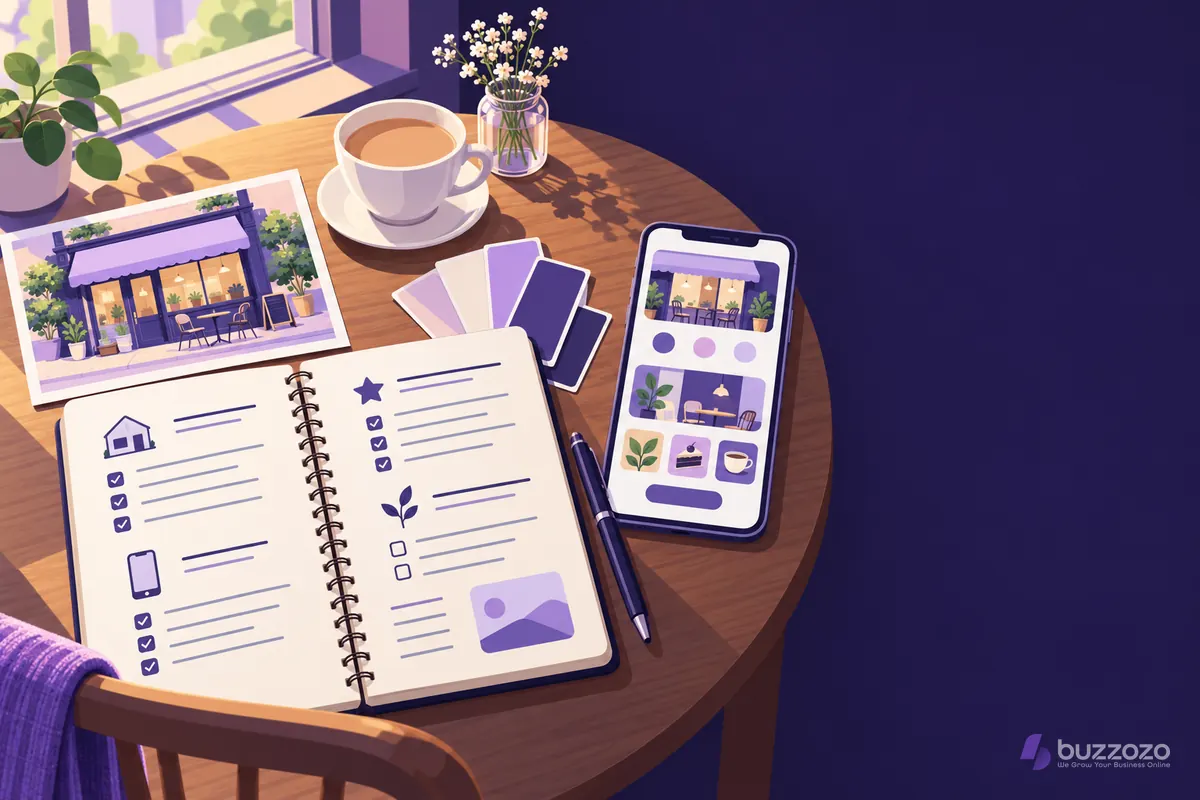
What is a website design brief?
A website design brief is the plan you hand to a web designer before any work starts. It explains what your business does, who your customers are and what the site must achieve. It is written in plain words, not code, and for most small businesses it fits on one or two sides of A4.
A brief is not a technical specification. You describe what you need and why. The designer then works out how to build it, and should come back to you with questions.
Think of it as the answer to one question: what does a good result look like for you? Everything else in the brief supports that answer.
Why write a brief before you contact a web designer?
Without a brief, every designer you speak to fills the gaps with guesses. You get quotes for different jobs, so you cannot compare them. Work then starts on the wrong plan, and the fixes come later, when they take longer.
A clear brief helps you in four ways:
- Quotes match, because every designer prices the same job.
- The first draft is closer to what you want, so there are fewer rounds of changes.
- You decide what matters most before anyone builds it.
- You have a written record to check the finished site against.
It also puts your customers first. The UK government's Service Manual tells its teams to start by learning user needs. In its words: "If you do not understand who they are or what they need from your service, you cannot build the right thing." The same holds for a small business website.
What should a website design brief include?
A good brief answers ten questions. Keep each answer short and specific. One clear line beats a paragraph of wishes.
- About your business: what you sell, where you work and what makes you different.
- The main goal: the one action you most want a visitor to take, such as calling, booking or buying.
- Your customers: who they are, what they ask before they buy and what stops them.
- The pages: a short list, such as home, services, prices, about and contact.
- Content and photos: what you already have, and what someone needs to write or shoot.
- Look and feel: two or three sites you like, and what you like about each one.
- Features: bookings, payments, a contact form, a map or a members area.
- Must-haves: accessibility, cookie consent, and your logo and brand colours.
- Spend and deadline: what you plan to spend, and any date the site must be live by.
- After launch: who updates the site, who keeps it secure and who you call when something breaks.
Two of those must-haves come from outside your business. On accessibility, the Service Manual asks government services to meet the Web Content Accessibility Guidelines (WCAG) 2.2 at level AA (double A) as a minimum. That is a sound target for any business site, because it helps people with poor sight, shaky hands or slow connections use your pages.
On cookies, the UK's data regulator is the Information Commissioner's Office (ICO). Its guidance on cookies says "You must tell people if you set cookies, and clearly explain what the cookies do and why." It adds that you must get the user's consent. Put this in the brief, so the designer plans for it from day one.
Rather have it done for you? We build your website free, it goes live in days, and you pay nothing for the first 14 days. No card needed. See how the free 14-day trial works.
What does a short website design brief template look like?
Copy the headings below into a document and fill each one in. Here is an illustrative example, not a real firm: a small cafe in Bristol that wants more table bookings and catering orders.
- Business: an independent cafe in Bristol, open seven days, known for home baking and a catering service for local offices.
- Main goal: more table bookings at weekends, and catering enquiries from offices on weekdays.
- Customers: local families and office managers who want to see the menu, prices and opening hours before they book.
- Pages: home, menu, catering, about, and contact with booking.
- Content: the owner has menu text and phone photos. A writer and a photographer are needed for the rest.
- Look and feel: warm and simple, with large food photos. Two sites the owner likes, noted with what works on each.
- Features: table booking, a catering enquiry form and a map.
- Must-haves: WCAG 2.2 AA, a cookie banner that asks before setting cookies, and the existing logo.
- Spend and deadline: a monthly plan rather than one large payment, and live before the Christmas booking rush.
- After launch: the owner updates the menu, and the build team handles hosting, security and backups.
Notice what the example has decided. There are two goals, but each page serves one of them. The menu is never more than one tap away, because that is the first thing customers ask for. If you want to see how a brief turns into page layouts, our guide to website wireframes shows the next step.
What mistakes make a website design brief less useful?
Most weak briefs fail in the same few ways. Each one costs time later, when the site is half built.
- Listing features instead of goals. "A blog and a slider" says nothing about what the site must achieve.
- Copying a large brand's site. Their goals, content and team are not yours.
- Leaving content until last. Missing words and photos are the most common reason a launch slips.
- No single decision-maker. Feedback from five people with no final say pulls the design five ways.
- Forgetting what happens after launch. Updates, security and backups need an owner from day one.
- Asking for everything at once. A short first version that works beats a long list that never launches.
Why does a good website design brief take real skill and time?
Filling in ten headings is quick. Getting the answers right is not. A strong brief rests on knowing your customers. What do they search for? What do they ask before they buy, and what makes them trust a business they have never used?
Here is what a skilled team works out before it writes a brief:
- The search words your customers use, so each page matches a real question.
- Which single action matters most on each page, and what can wait.
- What the accessibility and cookie rules mean for your forms, menus and tracking.
- How the site reads on a small phone held in one hand.
- What content you need, who writes it and when it must be ready.
- A realistic timeline, with the slow parts named up front.
That work takes research, a few rounds of questions and experience of what goes wrong. A premium UK agency custom design typically costs £2,000 to £7,000 for a small business site, and the brief is where that work starts. Our guides to what a website costs and how long a website takes show where the brief fits in a real project.
Should you write the brief yourself or have it done for you?
Write it yourself if you have the time and enjoy the planning. The ten headings and the template above will give you a sound first draft. If you would rather spend that time running your business, hand the brief to a team that writes them every week.
If you would rather not write it yourself, our web design service writes the brief with you, then plans, writes and builds your site. Ten minutes on a call or WhatsApp is all we need to start, and you see the finished pages before you pay anything.
Once the site is live, a managed website, built and cared for by us, keeps it fast, secure and up to date. Buzzozo builds websites for UK small businesses and shows them how to use AI to answer common questions and handle new enquiries day and night.
The Website plan is from £149 a month, with the build, Buzzozo cloud hosting and care included. Compare the plans and prices, or start your free 14-day trial. No card needed, and you can cancel any time.
Before you write the brief, be clear on your unique selling point, because the design should lead with it. Replacing a site you already have? Read how to redesign a website without losing search rankings as well.
Common questions
How long should a website design brief be?
For most small business sites, one or two sides of A4 is enough. Cover your goal, your customers, the pages, your content, your must-haves, your spend, your deadline and who looks after the site after launch. Short, specific answers are more useful to a designer than long ones.
What is the difference between a website brief and a website specification?
A brief says what the site must do and why, in plain words, and you write it. A specification says how the site will be built, with pages, features and technical detail, and the designer or developer writes it from your brief.
Do I need a brief if I hire a web design team?
Yes. A good team still needs to know your goals, your customers and your must-haves. Many teams help you write it. At Buzzozo, ten minutes on a call or WhatsApp is all we need to start, and we turn that into the brief for your site.